
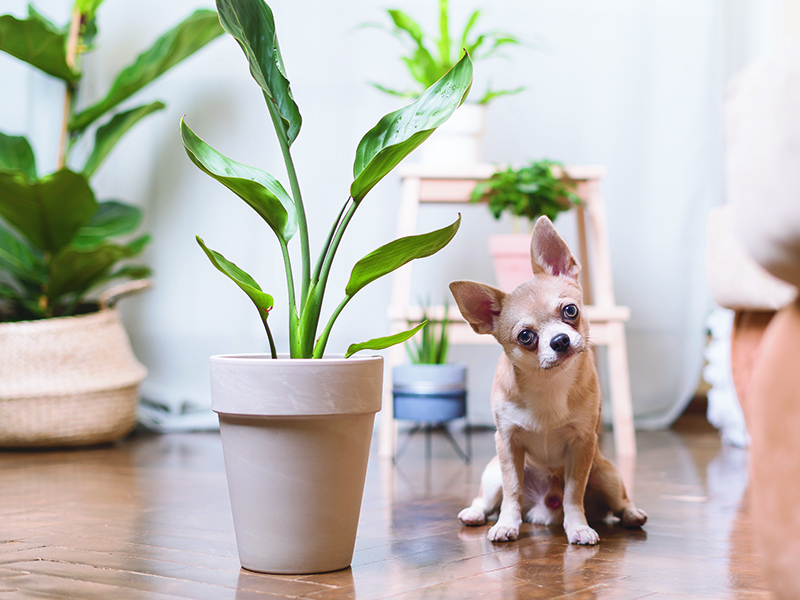
Keeping pets safe, healthy and happy is something all pet parents strive for. Now that it’s summer and many pets are enjoying more time outside, we thought it would be helpful to provide a list of some of the most common toxic plants to avoid. While we’re at it, we thought it would be helpful to share information on essential oils that are harmful, as well.
Note: A great tool for all pet parents is the ASPCA Poison Control Center mobile app – it can help you identify more than 300 potential hazards, information about the severity of the problem and what to do next.
10 Common Plants That Are Toxic To Pets
Azalea – Can cause gastrointestinal issues, overall weakness, discoordination and weak heart rate
Baby’s Breath – Good to be aware of, since many bouquets include this wispy plant – can cause vomiting and diarrhea
Daffodils – The bulbs are especially toxic – if ingested can cause drooling, nausea, vomiting, diarrhea, abdominal pain, abnormal breathing and cardiac arrhythmias
Gladiola – This very popular summer flower can cause drooling, vomiting, diarrhea and lethargy
Holly – Though low on the toxicity chart, if ingested, this plant can still cause vomiting and diarrhea
Ivy – Can cause vomiting, diarrhea, abdominal pain, excessive salivation and drooling
Lilies – Toxic to both cats and dogs, but especially for cats. All members of the lily family, including daylilies, tiger lilies, Easter lilies, calla lilies and more, can cause acute kidney failure. All parts of the plant are dangerous – the petals, leaves, stem and pollen. Even the water that lilies have been sitting in can contain toxins
Lily of the Valley – Not a true lily, however also very toxic to pets. The beautiful flower can cause arrhythmia, low blood pressure, seizures and even coma leading to death
Sago Palm – Can cause vomiting, diarrhea, seizures, liver failure and potentially death
Tulips – The flower itself may only cause mild stomach irritation, especially for dogs, however, the bulbs are the real culprit, as they contain the most concentration of toxins
Tomato plants – The leaves and stem can cause weakness, gastrointestinal problems, drowsiness, dilated pupils, slow heart rate and confusion
If you suspect your pet has consumed any of these plants, immediately contact your vet or the ASPCA Poison Control Center at 888.426.4435.
Essential Oils That Are Toxic To Pets
Essential oils are concentrated compounds extracted from plants. While many are beneficial for humans, most are dangerous for pets. This is because their bodies cannot metabolize the oils. Whether applied directly to the skin or circulated through a diffuser, essential oils can be quite toxic to fur babies and can lead to irreversible liver failure and even death.
Toxic Oils Include
- Cinnamon
- Citrus
- Eucalyptus
- Lavender (especially toxic to cats)
- Oregano (especially toxic to cats)
- Pennyroyal
- Peppermint
- Pine
- Sweet Birch
- Tea Tree
- Thyme
- Wintergreen
- Ylang Ylang
If your pet comes into contact with any of these oils, immediately contact your vet, the ASPCA Poison Control Center, or visit the nearest veterinary emergency hospital.