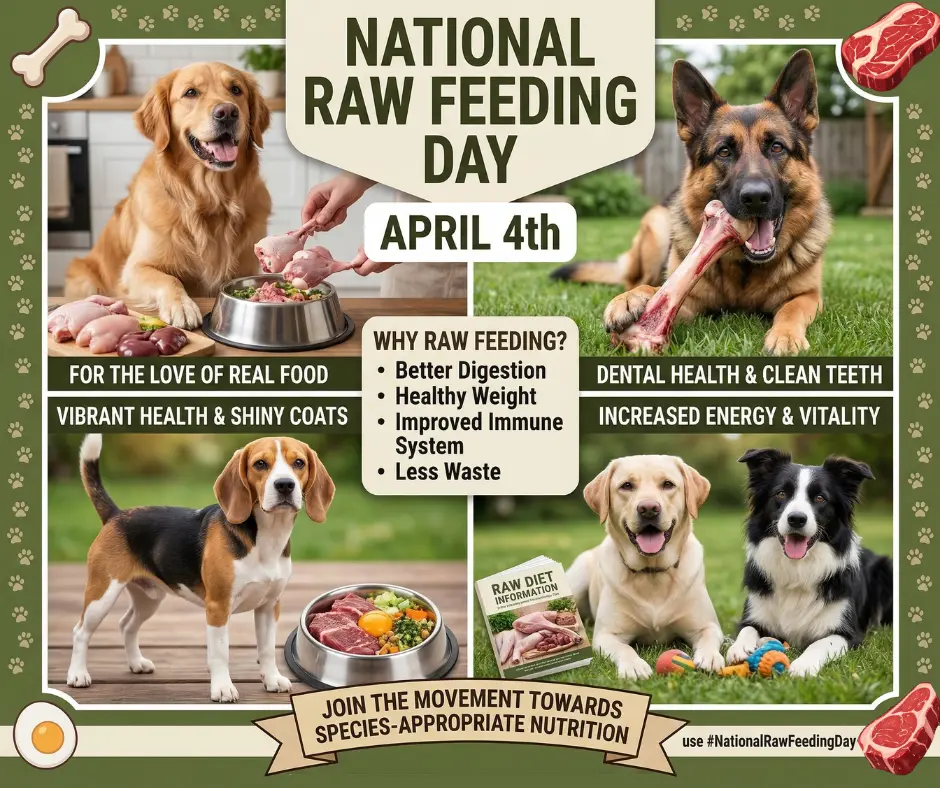
Celebrate National Raw Feeding Week: Back to Basics (and Bowls!)
Get ready to clear some space in the freezer! National Raw Feeding Week (April 1–5) is officially here. Whether you’re a seasoned “meal prepper” for your pups or you’re just starting to wonder why everyone is talking about organ meats and bone ratios, this week is all about celebrating the nutritional power of a species-appropriate diet.
For many pet parents, switching to raw is about more than just a trendy bowl—it’s about seeing that “raw glow” in real-time.
Why the Raw Movement is Growing
The core philosophy behind raw feeding is simple: biologically appropriate nutrition. By mimicking what canines and felines would naturally eat in the wild, many owners report transformative changes in their pets’ health.
- Shiny Coats & Healthy Skin: High-quality fats and proteins do wonders for shedding and dander.
- Dental Health: Nature’s toothbrush! Chewing on raw meaty bones helps reduce plaque and tartar buildup.
- Smaller, Firmer Stools: Better absorption of nutrients means less waste coming out the other end (every pet owner’s dream).
- Energy & Weight Management: High protein and low carbs help maintain lean muscle and steady energy levels.
Getting Started: The Golden Rule
If you’re new to the game, the most important thing to remember is balance. A raw diet isn’t just a steak in a bowl; it requires a specific ratio to ensure your pet gets all the vitamins and minerals they need. Most raw feeders follow the 80/10/10 rule (also known as the Prey Model):
Component | Percentage | Purpose |
Muscle Meat | 80% | Provides essential amino acids and energy. |
Edible Bone | 10% | The primary source of calcium and phosphorus. |
Organs | 10% | Nature’s multivitamins (at least 5% should be liver). |
Note: Many “BARF” (Biologically Appropriate Raw Food) feeders also include a small percentage of pureed vegetables and fruits for added fiber and antioxidants.
Tips for a Successful Week
- Safety First: Treat raw pet food just like your own raw chicken. Wash your hands, sanitize your counters, and keep those stainless steel bowls sparkling clean.
- Transition Slowly: If you’re switching from kibble this week, take it slow. Mix a small amount of raw with their current food to avoid digestive upset.
- Consult a Pro: If you’re feeling overwhelmed, look for “Complete and Balanced” commercial raw blends or talk to a vet who is supportive of raw feeding.
Join the Conversation
This week, we want to see those vibrant bowls! Use the hashtag #NationalRawFeedingWeek to share your tips, your pet’s favorite protein, or that “before and after” transformation story.
Happy feeding!