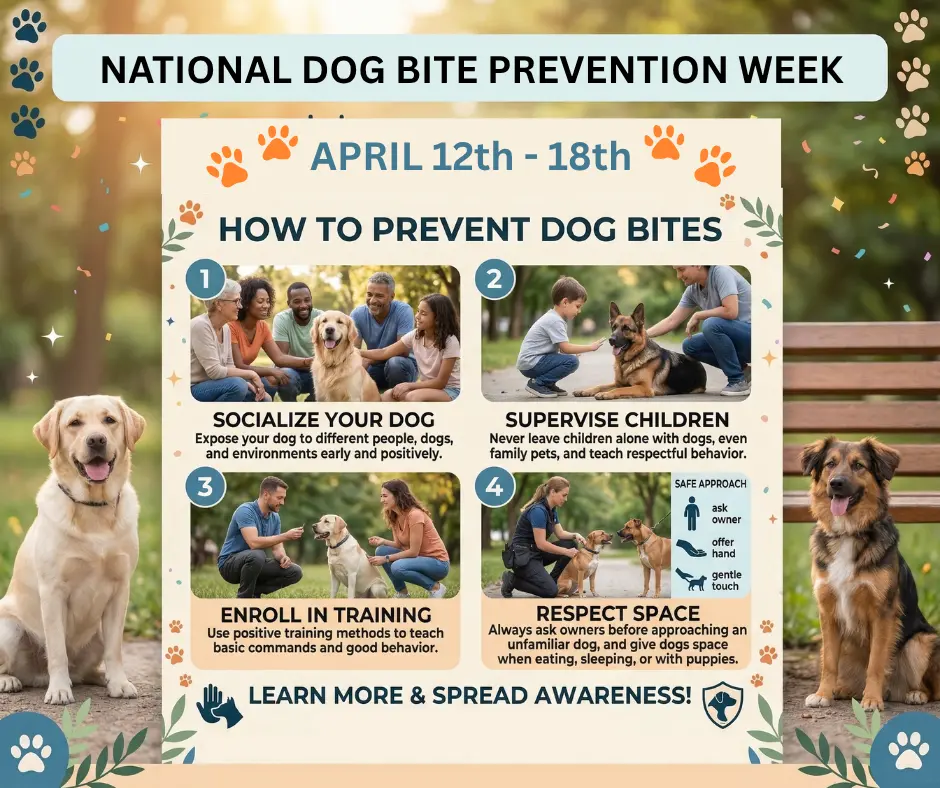
National Dog Bite Prevention Week April 12th -18th : Prioritizing Safety and Responsible Pet Ownership
According to the American Veterinary Medical Association (AVMA), more than 4.5 million people are bitten by dogs in the United States each year, and a significant portion of these incidents involve children. While some bites might cause minor injuries, others can lead to serious physical and emotional trauma. This is why National Dog Bite Prevention Week is so vital—it serves as a dedicated period to raise awareness, provide education, and promote responsible practices that benefit both humans and our canine companions.
The goal isn’t just to prevent incidents during a single week; it’s about fostering a lasting commitment to understanding dog behavior, respecting their boundaries, and equipping owners with the knowledge to create safe environments.
Why Do Dogs Bite?
The first step in prevention is understanding the “why” behind dog bites. Contrary to common belief, bites are rarely due to a dog simply being “bad.” Instead, bites are typically a reaction to a situation. Common reasons include:
- Fear and Anxiety: When a dog feels threatened, cornered, or overwhelmed, their instinct can be to defend themselves.
- Protection: Dogs often feel the need to protect their territory, food, toys, or human family.
- Pain or Illness: If a dog is in pain or not feeling well, their tolerance level decreases, and they may react negatively to handling.
- Overstimulation or Play: Sometimes, high-energy play can escalate, especially with children, and can lead to unintentional nips.
- Startle: A dog can react negatively if they are startled while sleeping, eating, or caring for puppies.
Essential Safety Rules for Children (And Adults!)
Education is the cornerstone of prevention. Here are the must-know safety rules every parent should teach their children—and that adults should also remember:
Always “Ask to Pet” First: Never approach a strange dog or try to pet it without getting permission from its owner. And even then, let the dog sniff your hand first to see if they are receptive.
Be Still Like a Tree: If a strange dog approaches you, teach your child to stand still “like a tree”—arms at their sides, remaining calm and looking down or away. Do not run, scream, or wave your arms, as this can trigger a dog’s chase instinct.
Respect a Dog’s Space and Belongings: Never approach a dog while they are eating, sleeping, or chewing on a toy. Do not attempt to take an object from a dog’s mouth unless you are a qualified professional or working with a trained dog under controlled circumstances.
Recognize the Warning Signs (Dog Body Language): Teach children to recognize signs that a dog might be stressed or uncomfortable. These signs can be subtle but are crucial warnings:
- A “whale eye” (the whites of their eyes are visible)
- A tense body, especially along the back or jaw
- Ears flattened back
- A low-wagging, stiff tail (a wagging tail doesn’t always mean they’re happy!)
- Lip-licking or yawning when not tired
No Teasing: Never tease, pull at, or wrestle roughly with a dog. This behavior can make a dog anxious or defensive.
For Pet Owners: Our Role in Prevention
As dog owners, the primary responsibility for prevention rests with us. We can dramatically reduce the risk of bite incidents by committing to responsible pet ownership:
Invest in Training and Socialization: Training your dog from a young age is crucial. Focus on basic commands and, most importantly, early, positive socialization. Introduce your puppy to a variety of people, environments, sounds, and other dogs to build their confidence.
Never Leave Children Unsupervised Around Dogs: This is the golden rule, no matter how well-behaved your dog is. Play can change quickly, and small children can unintentionally hurt or overwhelm a dog. Constant supervision is necessary to ensure safety for both.
Respect Your Dog’s Signals: Pay close attention to your dog’s body language. If they are showing signs of discomfort (panting, pacing, hiding), respect their need for space. Remove them from stressful situations.
Understand the Impact of Breed: While any dog can bite, it is important to understand the characteristics and energy levels of the specific breed you own. Different breeds were bred for different purposes, which can influence their temperaments and needs for exercise and training.
Seeking More Information
For reliable, scientifically backed information and resources, always turn to the leading experts. The organizations that lead the charge in dog bite prevention and animal welfare are excellent resources:
- AVMA American Veterinary Medical Association
By working together to understand our pets and teaching children how to interact safely with them, we can build a future where dog bites are the exception, not the rule. Let’s make every week about responsible ownership and safe, loving relationships with our dogs.