National Animal Poison Prevention Week (March 15th–21st): Raising Awareness, Saving Lives
Our pets are more than just animals; they are beloved members of our families. We go to great lengths to ensure they are happy, fed, and loved. However, even in the safest seeming homes, hidden dangers can lurk in plain sight.
March 15th through the 21st marks National Animal Poison Prevention Week. This dedicated week serves as a vital reminder to pet owners everywhere to stay vigilant, get educated, and take proactive steps to protect our furry, feathered, and scaled companions from accidental poisoning.
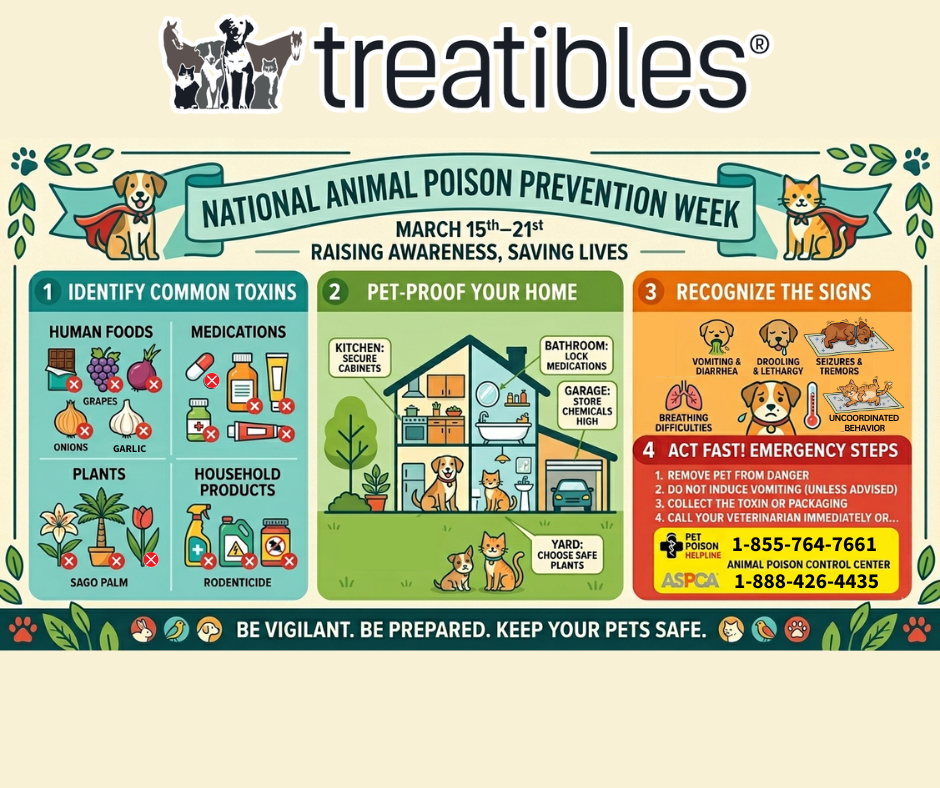
To help you navigate this essential aspect of pet parenthood, we’ve put together a comprehensive visual guide. Below is our “Pet Poison Prevention Blueprint,” breaking down everything you need to know to keep your home safe.
Your Visual Guide to Pet Safety
(Insert the Infographic Image Here)
Let’s break down the key sections of the guide so you can create a poison-free environment for your pets.
- Identify Common Toxins
The first step in prevention is knowing what to look out for. Many items that are perfectly safe for humans are highly toxic to animals.
- Human Foods: While it’s tempting to share a snack, avoid giving your pets chocolate, grapes/raisins, onions, garlic, or anything containing Xylitol (a common sugar substitute found in gum and peanut butter). Even small amounts can cause severe reactions.
- Medications: Never give your pet human medication unless specifically prescribed by your veterinarian. Keep all prescription and over-the-counter pills (like ibuprofen or acetaminophen), creams, and vitamins securely stored away.
- Plants: Inside and outside the home, certain plants can be deadly. Be wary of Lilies (highly toxic to cats), Sago Palms, Tulips, and Azaleas. Always check if a new plant is pet-safe before bringing it home.
- Household Products: This category includes cleaning supplies, antifreeze (which has a sweet taste animals often like), rodenticides, and insecticides. Secure these items in locked cabinets.
- Prevent Accidents: “Pet-Proof” Your Home
Accidents happen, but many can be prevented by thinking like your pet. Follow these room-by-room tips from our blueprint:
- Kitchen: Use child-proof locks on lower cabinets where food and cleaning supplies are stored. Keep countertops clear of tempting (and toxic) snacks.
- Bathroom: Medications should be stored high up or in locked drawers. Be mindful of cleaners used on toilets and surfaces.
- Garage: This is often a hotbed of toxins. Store all chemicals, paint, and especially antifreeze on high shelves or in sealed containers. Immediately clean up any spills.
- Yard: When gardening, choose safe plants and be cautious with fertilizers and mulch, which can sometimes contain toxic ingredients like cocoa bean shells.
- Recognize the Signs
Even with the best prevention, ingestion can happen. It is crucial to recognize the clinical signs of poisoning immediately. Common symptoms include:
- Vomiting & Diarrhea
- Drooling & Lethargy
- Seizures & Tremors
- Breathing Difficulties
- Uncoordinated Behavior or stumbling
If you notice any of these symptoms or suspect your pet has ingested something toxic, do not wait for symptoms to worsen. Time is of the essence.
- Act Fast! Emergency Steps
If the unthinkable happens, stay calm and follow these immediate steps:
- Remove Pet from Danger: Safely get your pet away from the toxic substance to prevent further ingestion.
- Do NOT Induce Vomiting: Never try to make your pet vomit unless explicitly instructed to do so by a veterinary professional.
- Collect Evidence: If possible, collect the substance, packaging, or plant your pet may have ingested. This helps professionals determine the best course of treatment.
- Call for Help IMMEDIATELY: Contact your veterinarian or an animal emergency hospital right away. You can also call specialized animal poison control centers (numbers below).
Important Resources
Save these numbers in your phone now—you hope you never need them, but they can save a life in an emergency.
- Pet Poison Helpline: 1-855-764-7661
- ASPCA Animal Poison Control Center: 1-888-426-4435